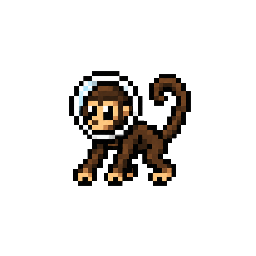
Able.
He flew 360 miles into space. He was recovered alive. He died four days later. He never made it to Huntsville.
The mission
Able was a rhesus macaque. On May 28, 1959, he was sealed inside a biocapsule fitted into the nose cone of a Jupiter AM-18 ballistic missile at Cape Canaveral alongside Miss Baker, a squirrel monkey. The rocket launched at 2:35 a.m. Both animals reached an altitude of 360 miles, experienced 38 Gs of force on re-entry, and were recovered alive from the Atlantic Ocean sixteen minutes after launch.
Able was the first animal in U.S. history recovered alive from a spaceflight. Miss Baker was the second. Both were described as being in good condition at recovery. Able was calm. His biomedical data — heart rate, respiration, temperature — showed no significant adverse effects from the flight itself.
Four days later, on June 1, 1959, Able died during a procedure to remove a medical monitoring electrode that had been implanted under his scalp. The anesthesia was the proximate cause. The surgery was routine. He did not survive it.
What came after
Able did not retire to a research center or a zoo. He did not outlive the average lifespan of his species by a decade. There is no bronze statue. He is preserved at the Smithsonian National Air and Space Museum in Washington, D.C. — a taxidermied specimen in a display case, wearing his flight suit.
Miss Baker retired to the U.S. Space & Rocket Center in Huntsville, Alabama. She lived there for twenty-five years. Able never got to Huntsville.
OpenBaker was built in Huntsville. That's where the name comes from. Miss Baker is the name. Able is the record — the other flight, the same morning, the one that ended differently. Both matter to the same history.